Updated October 2026.
Short answer: a good hotel website conversion rate is one that beats your own last month and last year, measured the same way each time. Property type, traffic source and device all move the number, so compare like with like and set targets from your own baseline, not from a published average.
| What to check | Why it matters |
|---|---|
| How you define conversion | Bookings over all sessions and bookings over engine sessions are different numbers. Never compare them. |
| Rate by traffic source | Brand search and email convert differently from social. Judge each against its own baseline. |
| Mobile against desktop | Mobile usually brings more visits. A small mobile gain can add more bookings than the same desktop gain. |
| The step into the booking engine | It is where most visitors drop off: speed, design break and fields before the price. |
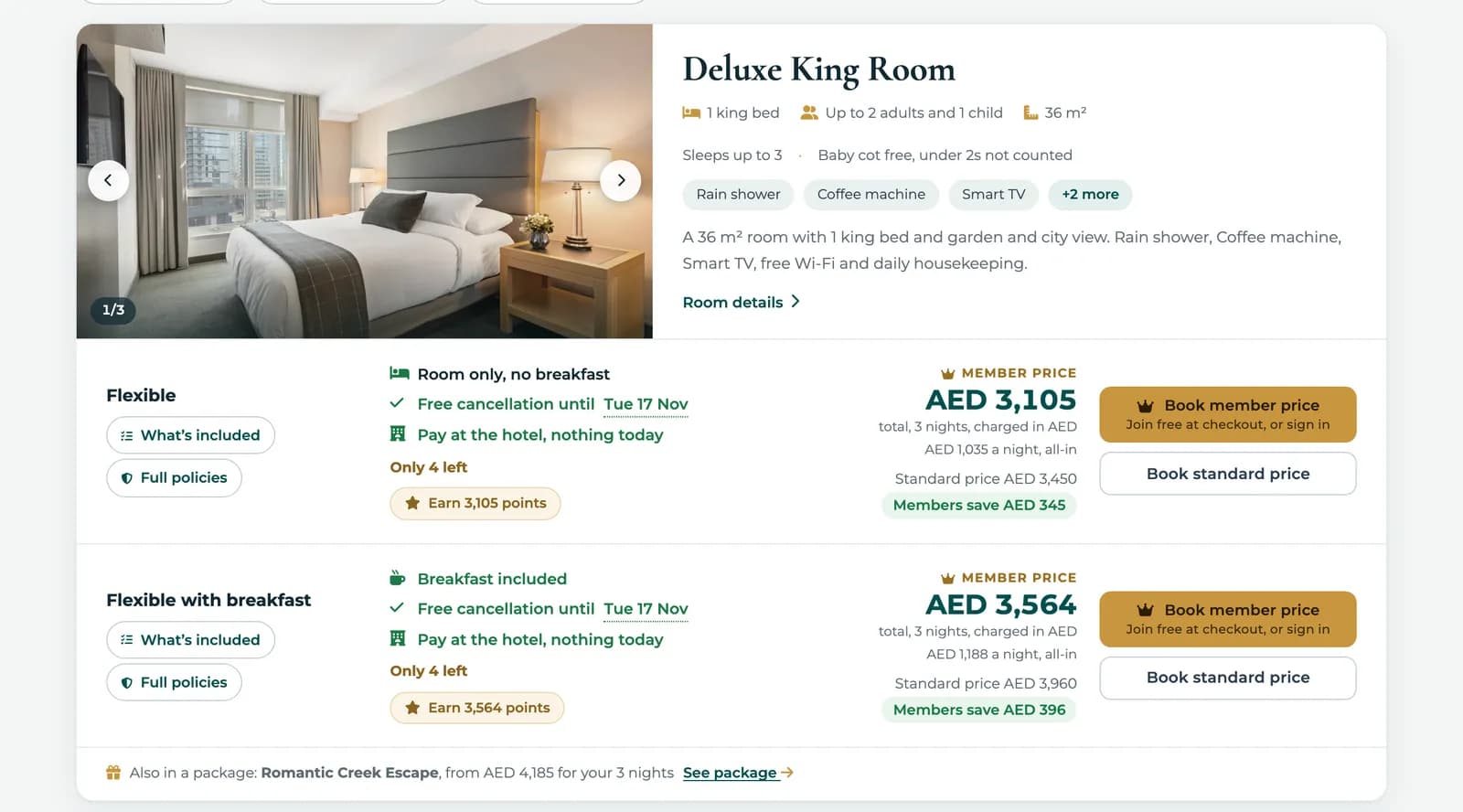
| A reason to book direct | A price that matches or beats the OTA, plus points and perks, gives the guest a reason to stay on your site. |
If the booking engine itself is the problem, see how to choose a booking engine with loyalty built in. For the price question, see how to choose a price match tool, and for bringing guests back, how to choose a hotel CRM.
Hotel website conversion rates are among the most frequently discussed, and most frequently misunderstood, metrics in hospitality digital marketing. A "good" conversion rate depends heavily on your property type, market, traffic sources, and how you define conversion in the first place. Without proper context, the same conversion rate could be excellent at one property and poor at another.
This article explains why property type, traffic source and device change what a good rate looks like, shows how to measure your own baseline, identifies the most common conversion killers, and outlines what realistic improvement targets look like.
Defining and Measuring Hotel Website Conversion
The Measurement Problem
Before comparing conversion rates, you need a consistent definition. The most commonly used calculation is:
Conversion Rate = (Completed Bookings / Unique Website Sessions) x 100
However, this basic formula masks important nuances. A session where someone reads your restaurant menu is fundamentally different from a session where someone checks room availability. Many properties now track "booking intent conversion rate", which is bookings divided by sessions that reached the booking engine, as a more actionable metric. Keep it separate from your overall site conversion rate, and never compare the two.
Attribution Complexity
Modern booking journeys are rarely single-session. A traveller might visit your website three times before booking: once from organic search, once from a retargeting ad, and once directly. Last-click attribution undervalues organic and social channels while overvaluing retargeting and brand search. First-click attribution does the opposite. Google Analytics 4 lets you report on data-driven attribution, which Google recommends, or last click. Check which one your property uses before comparing sources, because the choice changes your conversion rate by source.
Conversion Rate by Segment and Source
Overall Site Conversion Rates
We have not found a published conversion benchmark by hotel segment from a source we can cite, so we do not quote one. What can be said is how each segment tends to behave, so you can set your own baseline in the right context. Segments not listed here follow the same logic:
- Luxury/5-star: lower volume, higher intent quality
- Economy/budget: higher conversion, lower ADR
- Resort/destination: longer research cycle
The most useful comparison is your own property, month by month and year on year. Measure your rate, change one thing, and measure again.
Conversion by Traffic Source
Traffic source has a larger impact on conversion rate than almost any other variable. Visitors arriving from brand search, metasearch and email usually convert best; social and display visitors usually convert least:
- Brand search (Google): highest intent, already know your property
- Metasearch click-through: price-validated, booking ready
- Email/CRM campaigns: known audience, targeted offers
- Retargeting ads: previous visitors returning
- Non-brand organic search: discovery phase, lower intent
- Social media: awareness, not booking intent
- Display advertising: top-of-funnel awareness
This is why blanket conversion rate optimisation is less effective than source-specific optimisation. A property investing heavily in social media traffic will naturally have a lower overall conversion rate, but that does not mean the website is underperforming. Evaluate each traffic source against its own baseline.
Mobile vs. Desktop Conversion
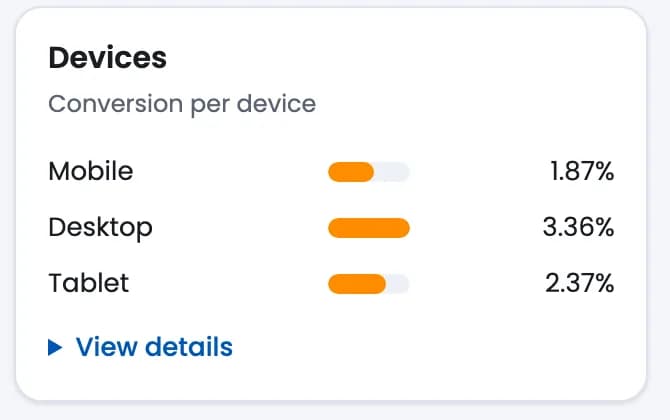
Desktop visitors usually convert better than mobile visitors. On most hotel sites, though, mobile brings the larger share of visits, so check your own split in analytics. Where mobile is the larger share, a small improvement in mobile conversion can add more bookings than the same improvement on desktop.
To see what an improvement is worth to your own hotel, multiply your yearly website sessions by the change in conversion rate to get the extra bookings. Multiply that by your average length of stay for room nights, then by your net revenue per room night after direct channel costs. Small changes on a large number of sessions add up.
The Most Common Conversion Killers
Booking Engine Friction
The move from your website into the booking engine is where most visitors drop off. Common causes include:
- Slow loading time: every extra second costs bookings
- Visual disconnect between website design and booking engine design
- Requiring too many fields before showing availability and pricing
- Poor mobile booking engine experience
For a detailed breakdown of booking engine UX issues, see our article on booking engine UX mistakes that kill conversion.
Missing Trust Signals
Travellers who arrive at your website from an OTA or metasearch listing are comparing your direct channel against platforms they already trust. Your website needs to establish credibility quickly. Show review scores, security badges, a clear cancellation policy and your direct booking benefits.
No Clear Direct Booking Advantage

If your website shows the same rate and conditions as Booking.com and nothing more, there is no rational incentive to book directly. A price that matches or beats the OTA, plus points and perks only a direct booking earns, gives the guest one. The price parity playbook covers how to create compelling direct booking value propositions while maintaining OTA compliance.
Improving Your Conversion Rate: Prioritised Actions
High-Impact, Low-Effort Wins
Changes you can make this month:
- Add a prominent "Book Direct Benefits" banner above the fold
- Display your review score (Google, TripAdvisor) prominently on the homepage
- Cut booking engine steps to the fewest you can
- Add a sticky "Check Availability" button on mobile
- Show your direct rate next to the OTA rate with PriceMatch AI, so guests can see the same price as the OTA, plus your points and perks
Medium-Impact, Medium-Effort Improvements
These take more work:
- Implement Booking Booster for exit-intent messages
- Redesign the mobile booking flow for single-thumb navigation
- Show members their points and perks once they sign in
- Install live chat or WhatsApp for booking assistance
- Implement abandoned booking email recovery
Strategic Investments for Top-Quartile Performance
Properties aiming for the top of their market invest in:
- Personalised website experiences based on visitor segment and source
- Dynamic packaging that bundles rooms with experiences
- A steady testing programme
- Metasearch distribution to increase high-intent traffic share
See What This Means for Your Property
Get your WhizzAuditSetting Realistic Improvement Targets
Timeline Expectations
Realistic conversion rate improvement tends to arrive in stages:
- First: quick wins come first
- Next: booking engine and UX improvements add to them
- Then: strategic changes and CRM integration follow
- Over time: compounding effects and optimisation build on everything before
Set your target from your own baseline. Properties with a low starting rate often have fundamental issues (site speed, mobile experience, booking engine quality) that, once fixed, give faster early gains.
Conversion rate optimisation is not a one-time project. It is an ongoing discipline that compounds over time. Start by measuring your current performance against your own history, identify your biggest conversion killers, and address them systematically. A WhizzAudit is a focused look at where your direct bookings are going, then a plan for what the hotel needs next.