Marriott Bonvoy had more than 295 million members at the end of June 2026, across a system of over 10,000 properties (Marriott, Q2 2026 results). In 2025, member stays accounted for 68 percent of Marriott's room nights globally (Marriott, full year 2025 results). These are numbers built on scale, and for independent hoteliers Bonvoy is often dismissed as irrelevant, a programme that simply cannot apply to a 60-room boutique property.
That dismissal is a mistake. While independent hotels cannot replicate Bonvoy's global footprint, the strategic principles behind it are remarkably transferable. This analysis breaks down what Marriott actually did right, what only works at massive scale, and what any hotel can adapt today.
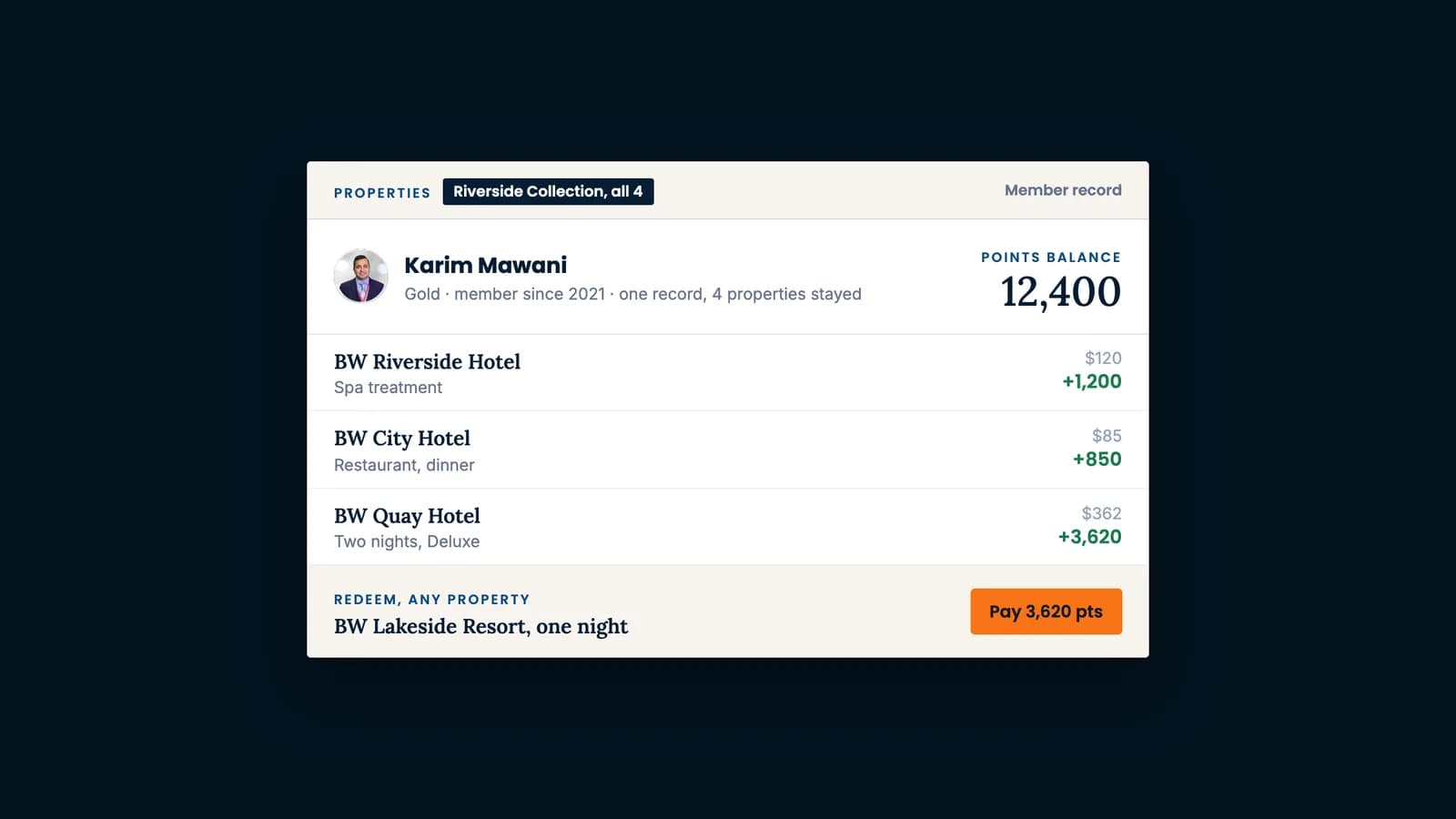
The Scale of Bonvoy's Impact
Marriott completed its combination with Starwood on 23 September 2016. On 13 February 2019, its three legacy programmes, Marriott Rewards, The Ritz-Carlton Rewards and Starwood Preferred Guest, completed their integration under one name, Marriott Bonvoy (Marriott, 2018 annual report on Form 10-K). Membership has kept climbing since: Marriott added approximately 43 million members in 2025 alone, reaching nearly 271 million at year-end.
The commercial weight shows in Marriott's own reporting. Members purchased approximately 50 percent of Marriott's room nights in 2018. By 2025, member stays accounted for 75 percent of room nights in the U.S. & Canada and 68 percent globally. The programme also reaches well beyond hotel stays: in 2026 Marriott reported new long-term agreements for its US co-branded credit card programme with JPMorgan Chase and American Express.
But the lesson that matters most for independent hotels is not the size. It is what loyalty does to the relationship with a guest who comes back. We look at the economics of that in our analysis of the repeat guest revenue multiplier: loyalty is about incremental spend, not just repeat visits.
What Marriott Got Right (And What You Can Copy)
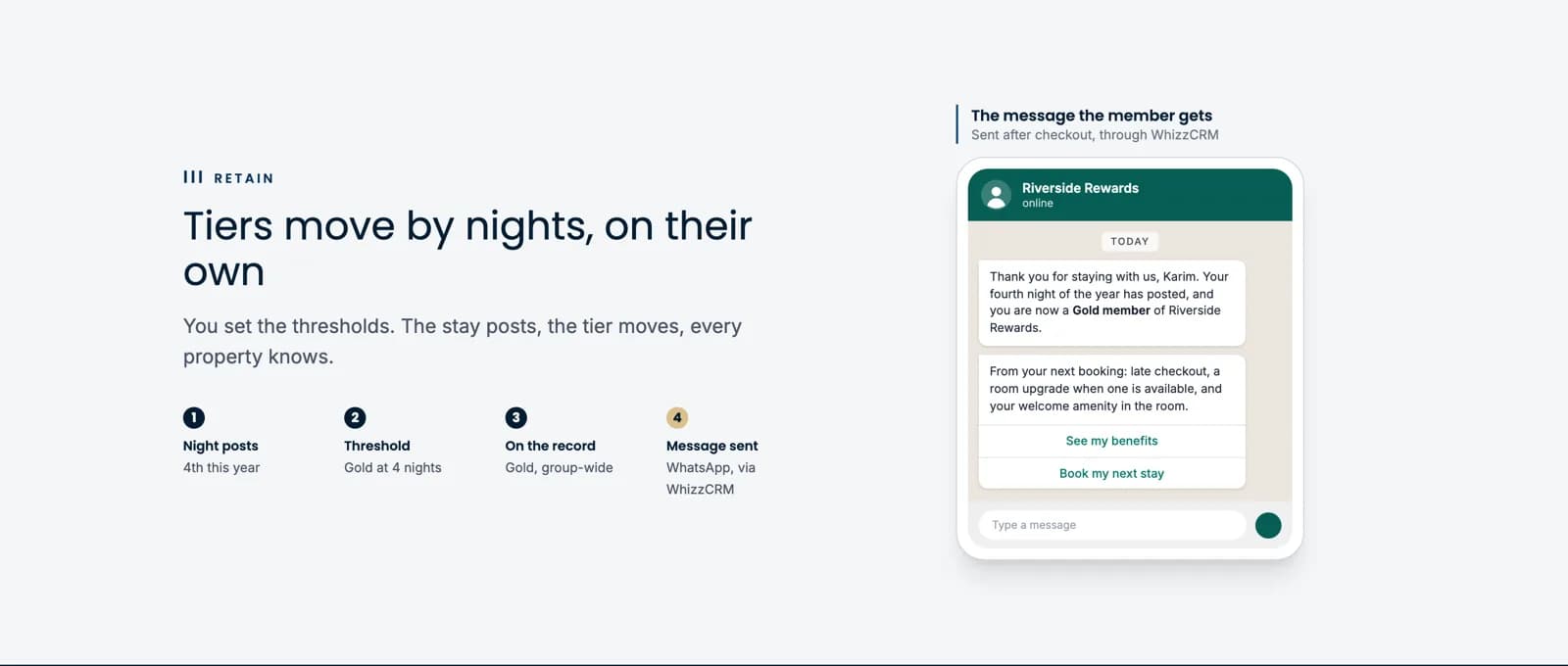
1. Instant Gratification, Not Deferred Promises. Bonvoy does not ask members to wait for a points balance before they feel the benefit. Its join page leads with free in-room Wi-Fi and mobile check-in, and status benefits such as Priority Late Checkout (based on availability) start at Silver Elite (Marriott Bonvoy terms). That immediate value makes enrolment feel worthwhile before a single point is redeemed.
Independent hotels can replicate this directly. Offer late checkout, welcome amenities, or room preferences to anyone who books direct and joins your guest programme. The cost is modest; the perceived value is high. As we explore in loyalty vs discounts, instant perks give guests a reason to join today, not someday.
2. Tier Psychology Works at Any Scale. Bonvoy's structure, a base membership level plus Silver, Gold, Platinum, Titanium and Ambassador Elite status, creates aspiration. Guests do not just want the benefits, they want the status. This psychological driver is not unique to large chains. A two or three-tier programme at an independent hotel (“Guest” and “VIP Guest,” for example), with tiers reached by nights stayed, triggers the same status-seeking behaviour.
3. Data-Driven Personalisation at the Property Level. Behind any large loyalty programme sits something more valuable than points: the guest profile. The more a hotel knows about a member, the more it can recognise them on arrival, a preferred floor, a pillow type, an anniversary. This level of personalisation is entirely achievable for independent hotels with a proper CRM system.
4. Direct Booking as the Loyalty Trigger. Under Bonvoy's terms, rooms booked through an online travel channel or other third-party channel are Non-Qualifying Rates that do not earn Points or membership tier benefits (Marriott Bonvoy terms). This creates a powerful incentive loop: book direct to earn points, earn points to get status, get status to unlock benefits, enjoy benefits and book direct again. Independent hotels can create the same loop with simpler mechanics: book direct to join, members get perks and points on every direct stay, and perks drive repeat direct bookings.
What Doesn't Scale Down
The Points Network. Bonvoy's points travel across credit card partnerships, airline transfers and more than 10,000 properties for redemption. An independent hotel cannot copy that network, and should not try to. What does scale down is earn and burn at property level: guests earn on direct room bookings and spend across the property, in the restaurant, the spa or the bar. Copying the chain's network model without that local focus is one of the reasons why hotel loyalty programmes fail.
The Marketing Budget. Marriott promotes Bonvoy through advertising, digital campaigns and high-profile sponsorships, including member experiences such as concerts and sporting events. Independent hotels need to earn loyalty through direct guest relationships, not brand awareness campaigns.
The Global Network Effect. A Bonvoy member can earn points in one city and redeem them at a property on the other side of the world. That cross-property network is something only chain scale provides. For independents, the answer is to focus loyalty on repeat visits and spend at their own property. See what a Cornell study found about loyalty at independent hotels.
Revenue Impact
By Marriott's own reporting, Bonvoy had more than 295 million members at the end of June 2026, and member stays made up 68 percent of its global room nights in 2025. Independent hotels cannot borrow the network, but they can borrow the mechanics: perks from the first direct stay, tiers reached by nights, and benefits that only apply when guests book direct.
The Independent Hotel Playbook
If Bonvoy were distilled to its core principles for a 50 to 200 room independent hotel, the playbook would look like this:
- Pair points with instant perks. Late checkout, welcome drink, room upgrade when available, early check-in, from the first direct stay. Guests value them immediately, and points earned on direct room bookings can be spent across the property.
- Keep tiers simple. “Member” (anyone who books direct) and “VIP”, reached by nights stayed. Two or three tiers at most.
- Capture preferences in your CRM. Pillow type, room location, dietary needs, occasion history. Use this data to personalise every return visit. A guest CRM platform makes this operationally practical.
- Lock loyalty to direct bookings. Benefits only apply when guests book direct. OTA bookings do not earn status or perks. Bonvoy applies the same rule to third-party bookings.
- Automate re-engagement. Use automated email sequences to bring members back. Marriott runs re-engagement at global scale. You need a few well-timed, personalised campaigns.
What This Means for Your Property
Marriott Bonvoy shows how much a loyalty programme can carry. The mistake independent hotels make is assuming the model requires Marriott's scale. It does not. The core drivers of loyalty, instant recognition, personalisation, direct booking incentives and status aspiration, work at any property size.
What you need is the right structure and the technology to execute it. With WhizzLoyalty, independent hotels run earn and burn loyalty on their own terms: guests earn on direct room bookings and spend across the property, with member rates and tiers that reward the direct channel. The principles are Marriott's. The execution is yours.
Ready to See Your Revenue Opportunity?
Get your WhizzAuditFor a detailed analysis of which loyalty model fits your property type and guest mix, see our guides on membership models for independent hotels and the latest loyalty trends for 2026.