Updated October 2026.
Short answer: the hidden cost of OTA dependency is everything the commission line does not show: guest details you never get, repeat stays you cannot invite, upselling you cannot offer before arrival, and undercutting of your own rate. Add those to the commission for your own hotel, then move share to direct by growing the direct channel, not by cutting OTAs.
| What to check | Where to look |
|---|---|
| OTA share of room nights | Your PMS, by month, against your own history. |
| Guests you can reach again | How many OTA guests end up in your CRM with consent to contact them. |
| Undercutting of your rate | The OTA price for your hotel by country, device and member level, against your direct rate. |
| A reason to book direct | Whether your site shows a price that matches or beats the OTA, plus points and perks. |
| Cost per booking by channel | Commission plus marketing cost, channel by channel. |
To act on it, see our guides on how to choose a price match tool, how to choose a hotel CRM and how to choose a booking engine with loyalty built in.
Most hoteliers know OTA commissions eat into margins. Fewer have quantified the full cost. When a property relies on Booking.com or Expedia for most of its room nights, the visible commission line item is only the beginning. The hidden costs, from rate erosion and guest data loss to marketing dependency and brand dilution, often exceed the commission itself.
This article breaks down the real cost structure of OTA dependency, not to argue that OTAs are the enemy, but to help revenue managers make informed allocation decisions. The goal is a healthier channel mix, not OTA elimination.
The Visible Cost: Commissions and Their Compounding Effect
Commission Rate Reality
OTA commission is set by contract and depends on your market, property type, and preferred partner status. Multiply your yearly OTA revenue by your contracted rate and you have the commission line for your own hotel. But the compounding effect matters more than the rate itself. As OTA share grows, so does bargaining leverage, but in the OTA's favour, not yours.
The reason is straightforward: high-dependency hotels are more likely to accept preferred partner programmes, visibility boosters, and Genius-style loyalty discounts that layer additional costs on top of the base commission. According to the HOTREC European Hotel Distribution Study 2024, in Europe every fifth hotel exceeds a 50% OTA share.
The Preferred Partner Trap
Booking.com's Preferred Partner Programme offers greater visibility in search results in exchange for a higher commission. The pitch is compelling: more eyeballs, more bookings. But Italy's competition authority, opening an investigation in April 2026, said that selection for the programme "appears to be driven largely by criteria that favour accommodation providers paying higher commissions to Booking.com". The investigation had not reached a finding when we checked. It is worth weighing the incremental revenue against the commission uplift, once you factor in the bookings you would have received anyway.
The Hidden Costs Most Hotels Miss
Guest Data and Relationship Loss
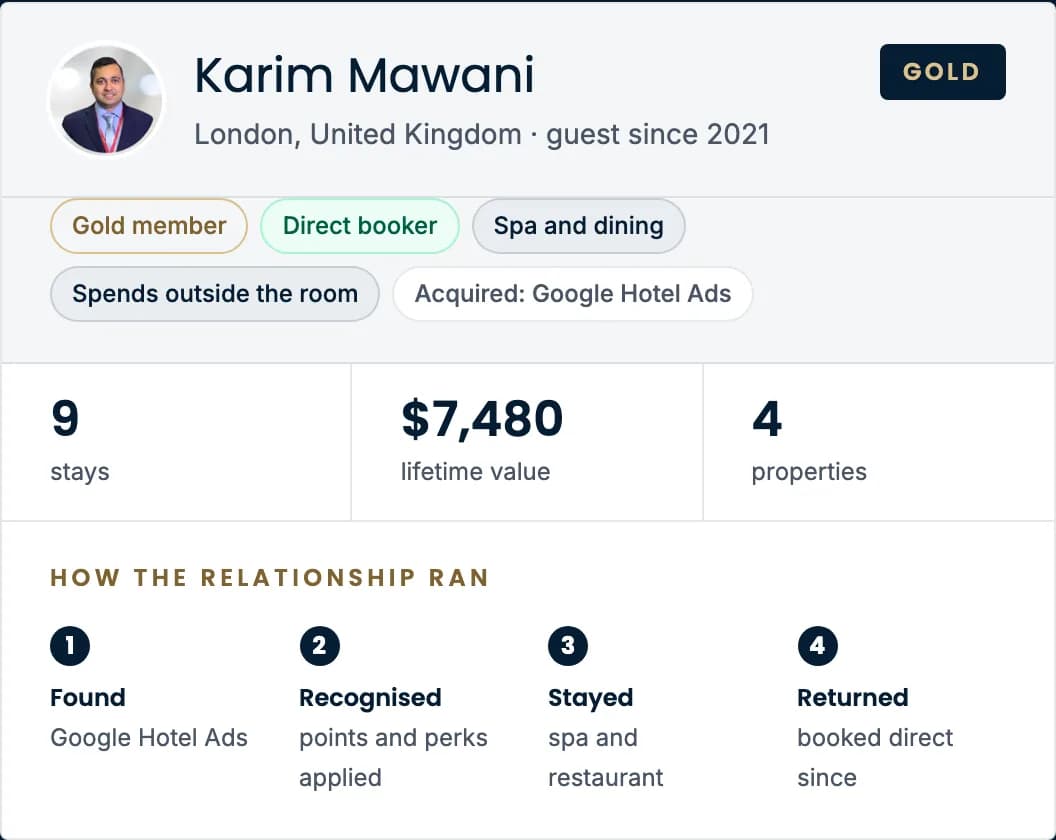
When a guest books through an OTA, the hotel receives a masked email address and limited profile data. This means no direct remarketing capability, no pre-arrival upselling based on past preferences, and no post-stay re-engagement sequence. The lifetime value of a direct booker is higher than that of an OTA-acquired guest, primarily because direct bookers enter your CRM where you can nurture repeat visits.
To size it for your own hotel, take your OTA room nights for the year: each one is a stay where the hotel holds little guest relationship data. Then compare how often guests in your CRM rebook direct with how often OTA guests do. The gap, times your OTA guests, is the repeat business you are not able to invite.
Rate Erosion Through Parity Pressure
OTA rate parity clauses, whether legally enforceable in your market or maintained through commercial pressure, limit your ability to differentiate pricing on your direct channel. Many hotels interpret parity requirements more strictly than necessary, publishing identical rates across all channels when regulatory frameworks actually permit more flexibility than hoteliers realise. Our rate parity monitoring guide covers the nuances by market.
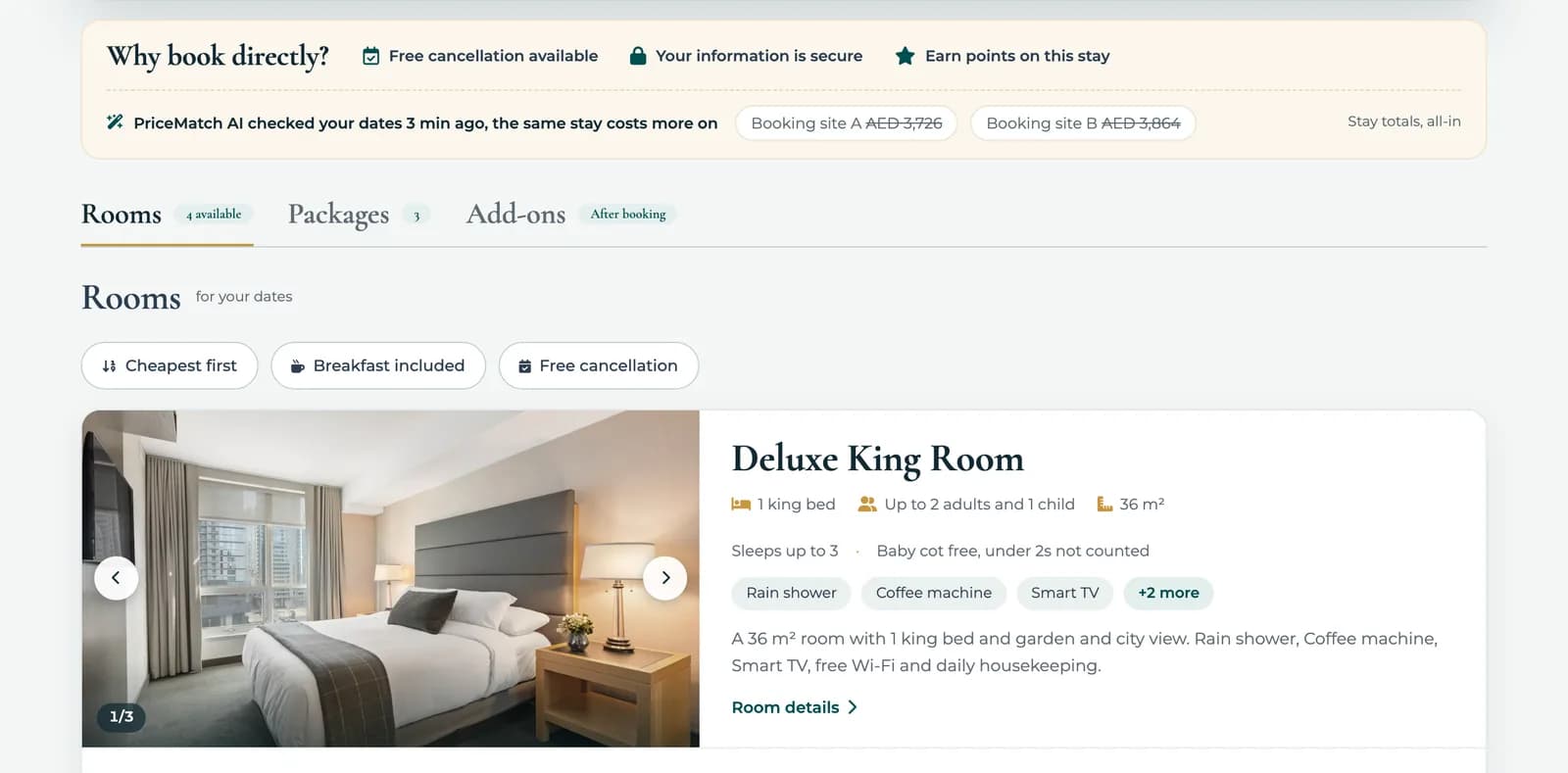
The downstream effect is real: when your website offers no reason to book direct, fewer visitors book. A price that matches or beats the OTA, plus points and perks only a direct booking earns, is that reason.
Marketing Spend Displacement
High OTA dependency creates a vicious cycle with marketing budgets. When OTAs deliver the majority of bookings, properties often reduce direct marketing investment, which further increases OTA dependency.
Quantifying Your True OTA Cost
The Full Cost Formula
To calculate the real cost per OTA booking, add these components:
- Base commission, per your contract
- Visibility programme uplift, where you take part
- OTA loyalty discounts (Genius, VIP Access) on qualifying stays
- Upselling you cannot do before arrival
- Repeat stays you cannot invite
- Undercutting of your rate
Add these up for your own hotel and compare with what any other channel costs you.
Benchmarking Your Channel Mix
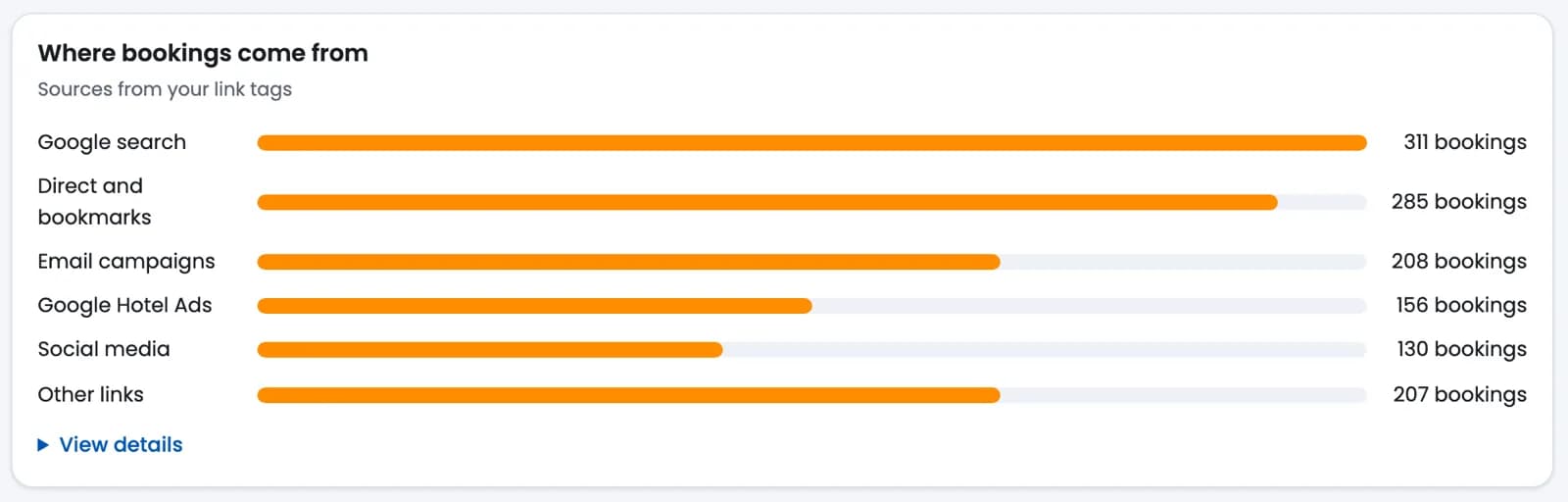
Channel mix differs by property type, so benchmark against your own history first. The HOTREC European Hotel Distribution Study 2024 gives European context: direct channels accounted for 50.9% of overnight staysin 2023, while the OTA share rose from 19.7% in 2013 to 29.6% in 2023.
If your OTA share is well above those levels, there may be recoverable revenue waiting in your direct channel. Use our WhizzAudit to model the specific impact for your property.
Moving Toward a Healthier Channel Mix
The 3-Phase Rebalancing Approach
Reducing OTA dependency is not an overnight project. It requires a phased approach:
Phase 1: Foundation. Ensure your website booking experience is competitive. Fix conversion blockers, establish a direct booking value proposition, and implement PriceMatch AI, so a guest comparing prices sees a price that matches or beats any OTA on your own booking page, plus your points and perks.
Phase 2: Acquisition. Launch metasearch campaigns on Google Hotel Ads and TripAdvisor to intercept high-intent travellers. Invest in retargeting website visitors who didn't complete bookings.
Phase 3: Retention. Build guest relationships through CRM and direct booking incentives that convert OTA-acquired guests into direct repeat bookers.
Loyalty, CRM and PriceMatch AI work best together. Loyalty gives the guest a reason to book direct. The AI-powered CRM knows the guest and brings them back with the one right offer. PriceMatch AI removes the last reason to book elsewhere: it matches or beats the OTA price, plus your perks on top.
What Not to Do
Avoid the temptation to aggressively cut OTA inventory before your direct channel is ready to absorb the volume. Properties that slash OTA allocation prematurely often see occupancy fall in the transition period before the direct channel catches up. The smart approach is displacement through growth, not forced reduction.
Similarly, avoid publicly disparaging OTAs or creating friction for OTA-booked guests at the property. These guests are potential direct bookers for their next visit. The Ewaa Hospitality case study shows what is possible: the group grew direct bookings 156% over six months.
See What This Means for Your Property
Get your WhizzAuditThe Strategic Framework for OTA Relationships
OTAs as Marketing Partners, Not Distribution Partners
The most effective approach reframes OTAs as paid marketing channels rather than primary distribution partners. Under this framework, OTA spend is evaluated against direct marketing alternatives. Work out your cost per booking on metasearch and on each OTA for comparable guest profiles; where one is clearly lower, the allocation decision becomes straightforward.
This does not mean eliminating OTA presence. OTAs provide genuine value through reach into markets and traveller segments your direct marketing cannot efficiently access. The question is not whether to use OTAs, but how much of your distribution budget they deserve relative to alternatives. For most independent hotels, the answer is less than they currently receive.
Tracking Progress
Monitor these KPIs monthly as you rebalance:
- Direct booking share (as % of total room nights)
- Cost of acquisition by channel (commission + marketing cost per booking)
- Website conversion rate
- OTA-to-direct conversion rate (guests who first book via OTA, then book direct)
- Net RevPAR by channel (after all distribution costs)
The path from OTA dependency to channel balance is measurable, achievable, and worth pursuing for any property that relies on OTAs for most of its bookings. The hidden costs compound over time, but so do the benefits of a healthier distribution mix. Start with an honest assessment of where you stand, then build a systematic plan to get where you need to be. A WhizzAudit can provide that starting assessment.